REPRONIG hosts landmark copyright summit in Ibadan, mobilises universities, authors, global experts


The Reproduction Rights Society of Nigeria (REPRONIG) has taken a major step toward strengthening copyright awareness and collective licensing in Nigeria’s higher education sector with a stakeholders’ summit held in Ibadan.
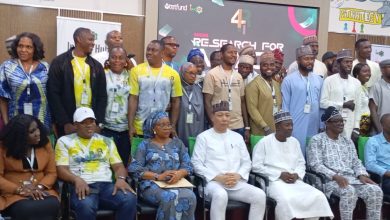
The stakeholders’ awareness meeting and board session, which took place on Thursday brought together scholars, publishers, authors, librarians, university administrators, and international copyright experts.
The hybrid event attracted participants physically and virtually, highlighting growing interest in Nigeria’s evolving copyright management framework and the push to promote responsible use of copyrighted materials in tertiary institutions.
The summit was coordinated by Tosin Akeredolu, acting executive secretary of REPRONIG, who facilitated discussions on intellectual property protection, licensing frameworks, and sustainable creative enterprise.
Among the participants were A.O. Omobowale, a professor at the University of Ibadan, who represented the vice-chancellor; Olu Obafemi, board member and immediate past chairman of REPRONIG; Gideon Bamigboye of Abiola Ajimobi Technical University; Obia Ogosi Ofem, chief executive officer (CEO) of Hebron Consulting; John Asein, director-general of the Nigerian Copyright Commission (NCC); and Usman Akanbi, president of the Association of Nigerian Authors (ANA).
Others included Uchenna Anioke, past president of the Nigerian Publishers Association; DWale Okediran, secretary-general of the Pan African Writers Association; Kunle Olatunji, deputy director and head of regulatory and compliance at the NCC; Camillus Ukah, former ANA president; and Lukman Dauda, president of the Nigerian Publishers Association.
Also present were Lanre Osanyi, university librarian of Lead City University; Jellili Ojuade, vice-chancellor of Ojaja University, Ilorin; Tokunbo Ishola, head of station at Oxygen FM; and other stakeholders from Nigeria’s academic and publishing sectors.
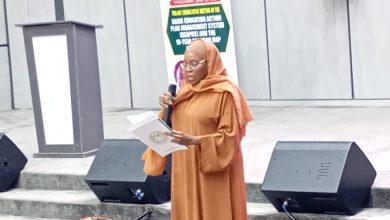
In his welcome address, Gbadega Adedapo, chairman of REPRONIG, described copyright management as a critical driver of creativity, research, and publishing.
Adedapo said the organisation plays a vital role in bridging creators and educational institutions by providing structured licensing arrangements that ensure authors and publishers receive fair compensation while universities gain responsible access to learning resources.
John Asein, director-general of the NCC, emphasised the strategic importance of REPRONIG in Nigeria’s copyright ecosystem and urged tertiary institutions to adopt licensing agreements and awareness programmes to strengthen compliance with copyright laws.
Representing the University of Ibadan, Omobowale stressed the need to protect intellectual labour while encouraging universities to adopt frameworks that balance access to knowledge with the protection of creators’ rights.
Similarly, Usman Akanbi, ANA president, highlighted the role of writers in Nigeria’s knowledge economy and called for stronger collaboration among authors, publishers, universities, and copyright institutions.
Lanre Osanyi, librarian at Lead City University, also emphasised the role of librarians in promoting ethical access to information and supporting advocacy on responsible use of copyrighted works.
The summit featured international perspectives on copyright management.
Anders Kr. Rasch, CEO of Copydan Writing in Denmark, shared insights from Denmark’s blanket licensing system, highlighting transparency, trust, and accountability as key factors behind its success.
Joseph Gyamfi, executive director of CopyGhana, presented Ghana’s experience with private copy remuneration in tertiary institutions, illustrating how structured collaboration can strengthen academic publishing while ensuring fair compensation for authors.
Antonios Baris, legal, policy, and technology counsellor at IFRRO, discussed the global role of collective management organisations representing over two million authors and publishers across 90 countries.
Also speaking, Olav Stokkmo, a consultant to the World Intellectual Property Organization (WIPO) and IFRRO, noted that education relies heavily on access to copyright materials and emphasised the importance of collective licensing for sustainable knowledge economies.
Participants also engaged in an interactive question-and-answer session on licensing frameworks, royalty distribution, and strategies for implementing copyright compliance within tertiary institutions.
A key highlight of the summit was the announcement by Jellili Ojuade, vice-chancellor of Ojaja University, Ilorin, that the institution had signed a licensing agreement with REPRONIG.
Ojuade said the move would promote responsible access to learning materials and encouraged other public and private universities to adopt similar agreements.
Wale Okediran, secretary-general of the Pan African Writers Association, commended REPRONIG for convening what he described as a timely and impactful forum.
He stressed that effective copyright management requires collaboration among authors, publishers, universities, and government institutions, urging participants to promote copyright awareness within their professional networks.
Participants agreed that strengthening copyright culture in Nigeria requires transparency, collaboration, and shared responsibility.
For REPRONIG, the Ibadan summit represents a major step in promoting collective licensing, protecting intellectual labour, and ensuring authors and publishers receive fair value for their creative works.