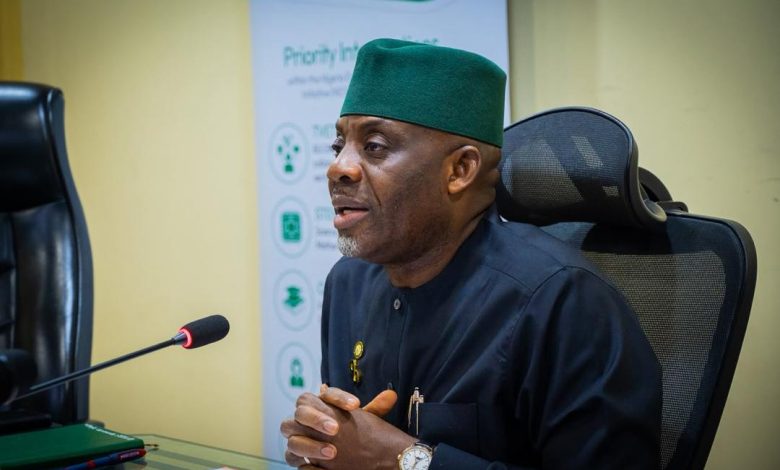
Tunji Alausa, minister of education, has inaugurated the governing board of the National Board for Technical Education (NBTE), charging members to accelerate reforms aimed at repositioning technical and vocational education as a driver of industrialisation, job creation and economic growth.
Speaking during the inauguration in Abuja on Thursday, Alausa said the move aligns with President Bola Tinubu’s renewed hope agenda, which places education and human capital development at the centre of Nigeria’s economic transformation.
The minister said the federal government is shifting the country’s education system from an overreliance on academic qualifications to producing skilled graduates capable of driving industrialisation, entrepreneurship and productivity.
He congratulated the chairman and members of the board on their appointments, expressing confidence that they would provide the strategic leadership needed to strengthen NBTE’s mandate and deepen reforms in the technical education sector.
Alausa said technical and vocational education and training (TVET) is no longer an alternative to university education but a strategic national priority.
According to him, Nigeria cannot achieve meaningful industrialisation without a strong workforce of technicians, technologists, artisans, fabricators, automation specialists, machine operators and other skilled professionals.
He said the federal government has prioritised the sector through sustained investments and reforms aimed at bridging the gap between education and industry while equipping learners with practical and lifelong skills.
The minister outlined four priority areas for the new board, including providing strategic leadership, strengthening governance and oversight, while allowing the NBTE management to handle the board’s day-to-day administration.
He also directed the board to fast-track the implementation of the Recognition of Prior Learning (RPL) framework in collaboration with the Industrial Training Fund (ITF) and other stakeholders to certify the competencies of skilled artisans under the national skills qualification framework.
According to Alausa, the initiative will improve employability, expand access to finance, create opportunities for government contracts and enhance labour mobility within the Economic Community of West African States (ECOWAS).
The minister also called for the modernisation of curricula through outcome-based education by integrating digital technologies, automation, artificial intelligence (AI), green technologies and advanced manufacturing systems to prepare students for industry.
He urged institutions regulated by NBTE to strengthen programmes in applied sciences, engineering, technology and innovation, while encouraging polytechnics to gradually phase out non-technical programmes outside their statutory mandate.
Alausa further stressed the need for transparency, accountability and prudent management of public resources, saying investments in technical education should translate into measurable improvements in skills acquisition, institutional performance, youth employment and national productivity.
Responding on behalf of the board, Babatunde Salako, its chairman, thanked President Bola Tinubu and the minister for the confidence reposed in members.
He described the inauguration as the beginning of a new chapter for technical education in Nigeria and pledged the board’s commitment to supporting the federal government’s TVET reforms.
Salako said changing the long-held perception of technical education as a second-choice option would be one of the board’s priorities.
He added that the board would work to encourage parents, students and the wider public to embrace TVET as a pathway to employment, entrepreneurship and national development.
Also speaking, Idris Bugaje, executive secretary of NBTE, described the inauguration as a landmark development, noting that the board was constituted after more than five years without one.
Bugaje said the board would work closely with the federal ministry of education to implement reforms aimed at strengthening technical education and expanding access to quality skills training across the country.