Why falling headline inflation may not mean relief for Nigerian households

BY ALIYU ILIAS
Headline inflation is what the average citizen wants to know, but there is more to inflation that every Nigerian needs to understand, especially policymakers who decide what happens to the country.
Headline inflation measures the overall increase in the prices of goods and services in an economy over a specified period, capturing changes across the broad basket of goods and services consumed by households.
At every release of the Consumer Price Index (CPI), the National Bureau of Statistics (NBS) reports headline inflation, core inflation and food inflation, among other economic indicators.
These figures are important indicators of the cost of living in Nigeria, as they capture changes in the prices of a basket of goods and services consumed by urban and rural households across the country.
The Nigerian inflation basket consists of food and non-alcoholic beverages, housing, transportation, health, education, clothing, communication and other categories of goods and services consumed by households.
The food component accounts for about 40 percent of the CPI basket measured by the NBS.
This underscores the importance of food production to Nigeria’s inflation outlook. Greater investment in food production could have a significant impact on headline inflation, particularly by helping to moderate food prices.
The July 2026 inflation figures show that headline inflation stood at 15.43 percent, while food inflation was significantly higher at 20.31 percent. On the surface, the headline inflation figure may appear encouraging, particularly when compared with the June figure.
However, the food inflation rate presents a red flag. The increase in food prices remains a major concern, given the significant weight of food in Nigeria’s inflation basket and its direct impact on household welfare.
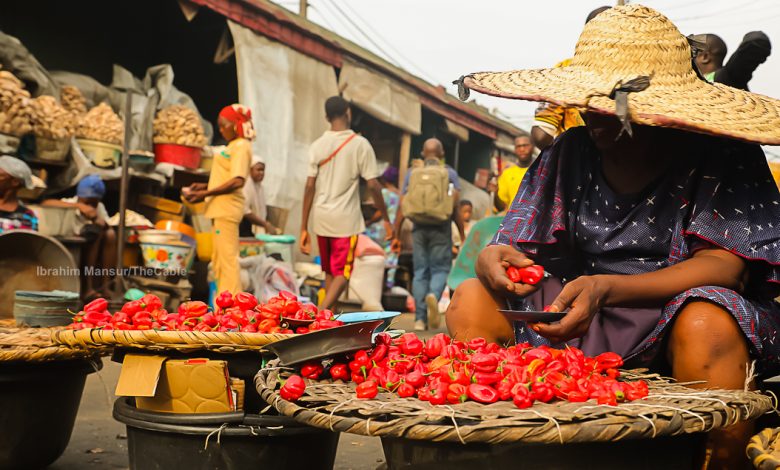
Food inflation indicates that food prices are still rising, even as the general increase in the prices of goods and services may be occurring at a slower rate. Food therefore remains a critical component of every inflation figure, particularly because Nigerians spend a significant share of their income on food.
In Nigeria, households spend more than 60 percent of their expenditure on food, while transportation, rent, school fees and other essential expenses compete for the remaining share.
This contrasts sharply with countries such as South Africa, where households reportedly spend about 18 percent of their expenditure on food. A lower share of household income spent on food can strengthen purchasing power and increase disposable income, leaving households with more money to spend on healthcare, education and other goods and services. Such spending can, in turn, contribute to broader economic activity and stimulate growth.
Nigeria’s challenges in food production are among the reasons the economy continues to struggle with price stability. The challenges are multifaceted, ranging from the longstanding problems of mechanisation, insecurity, access to affordable financing and irrigation to the availability of improved seeds, poor rural feeder roads, inadequate electricity, storage constraints and limited access to markets.
The current food inflation also reflects the high cost of transporting agricultural produce across Nigeria. Food may be available in places such as Kebbi, Zamfara and Benue, particularly in rural farming communities, but getting the produce from farms to markets and from surplus-producing areas to areas experiencing shortages remains a major challenge.
Unlike some other household expenses, food consumption cannot easily be postponed. Rent, for instance, can be planned for or spread over a period, but people need to eat every day. This makes food inflation particularly sensitive and underscores the need for the government to develop both immediate and long-term solutions to the problem.
In the short term, the government needs to improve food distribution by moving produce from areas of surplus to areas where it is scarce. Food is available on some farms but needs to be transported to markets and locations experiencing food deficits. This requires reducing the transportation bottlenecks currently affecting the movement of agricultural produce, including the high cost of petrol and diesel. These costs have been influenced by the removal of fuel subsidies as well as external shocks affecting global oil and gas markets and supply chains.
The government should also strengthen market monitoring through the Federal Competition and Consumer Protection Commission (FCCPC) and other relevant agencies to guard against hoarding, price manipulation and profiteering.
In the long term, the Nigerian government needs to invest heavily in the agricultural sector to increase the productivity of farms. Investment in irrigation, for instance, can support year-round farming and reduce the seasonal volatility that often causes shortages of certain food crops. If core inflation is moderating at 14.97 percent, while food inflation remains significantly higher, this suggests that food prices require more targeted intervention. Agriculture is one area where Nigeria can exert greater control over domestic price pressures, particularly through effective irrigation and improved agricultural production.
Access to affordable fertiliser and improved seeds is also critical to curbing food inflation. A 50kg bag of fertiliser currently costs about N50,000 to N60,000 in Nigeria, depending on the location and the level of government subsidy. The cost of fertiliser is now a major pressure on farmers, and much of this cost is eventually passed on to consumers. When high farm-input costs are combined with transportation challenges, the result is significantly higher food prices. This, in turn, forces Nigerians to spend more than 60 percent of their household expenditure on food, leaving less money for other essential needs.
Nigeria’s economy therefore needs to be managed in a way that provides immediate relief from the food inflation currently being experienced while addressing the structural problems affecting food production and distribution.
The decline in headline inflation does not necessarily mean that prices are falling. It means that the rate at which the general price level is increasing has slowed. However, when food inflation is accelerating, households may not feel the benefit of a lower headline inflation rate because food constitutes such a significant share of their expenditure.
Nigeria must therefore improve both the production and distribution of food, areas largely within its control, while building sufficient resilience into the economy to absorb external shocks.
Dr. Aliyu Ilias, an economist and public affairs analyst, writes from Abuja