The federal government has warned contractors and consultants handling the National Library of Nigeria project that they will face sanctions for delays, missed targets and substandard work.
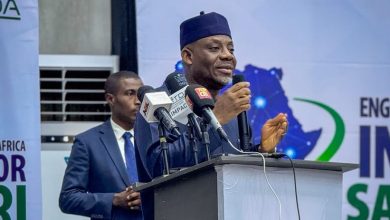
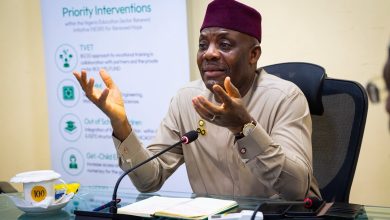
Tunji Alausa, minister of education, issued the warning on Sunday in Abuja at a meeting with stakeholders involved in the project, including contractors, consultants and officials of the National Library of Nigeria.
Alausa said the government is prepared to provide the necessary funding for the project but would demand performance, quality and accountability in return.
“This is a change day. We will make you accountable for the timelines we’re going to set for ourselves,” he said.
The minister said the government would establish delivery timelines and hold contractors and consultants to commitments contained in agreements being developed for the project.
He said the new contractual arrangements would include incentives and disincentives to drive performance.
“If you’re not meeting your guidelines, the timelines, I’m sorry, you’ll be penalised,” he warned.
Alausa said the project had been divided into two major components — physical infrastructure and furnishing — to allow both aspects to proceed concurrently.
He assured contractors that the government would make funds available to support the work, but stressed that funding would be tied to delivery and compliance with agreed standards.
The minister said the renewed push to complete the National Library was in line with President Bola Tinubu’s prioritisation of education and human capital development.
He described the National Library as more than a physical structure, saying it was a critical national institution for learning, research, knowledge development and human capital development.
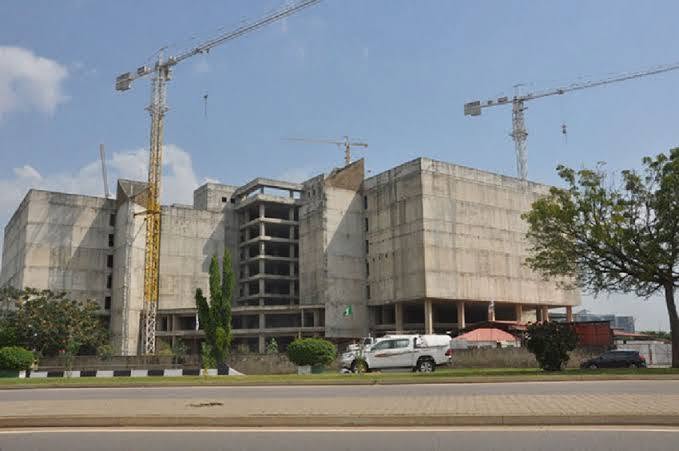
Alausa recalled that the National Library was conceived in 1981, while construction began in 2006 with an initial 24-month completion period.
Despite the original completion target of 2008, he said the project had remained unfinished for years.
The minister noted that the facility occupies a prominent location in Abuja’s Central Business District, alongside major national edifices.
He said the renewed attention to the project reflected a shift in the federal government’s approach to education infrastructure under Tinubu.
Alausa also commended Tinubu for providing the political support required to advance the project.
He praised Oluremi Tinubu, first lady, for her commitment to the project and efforts to mobilise additional support for its completion.
The minister recalled that the first lady, a former teacher, used her 2025 birthday to mobilise support for the National Library, raising about N25 billion within two months.
He described the intervention as a demonstration of her commitment to education and the future of Nigerian children.
Alausa also said the first lady’s visit to the National Library of Qatar had influenced the federal government’s vision for the Nigerian facility.
He said she had urged Nigerian officials and project stakeholders to study the Qatar library and incorporate relevant modern features into the Nigerian project.
“We’ll have a National Library that looks like National Library of Qatar,” he said.
The minister said the renewed vision would place greater emphasis on accessibility and inclusion, with dedicated spaces and facilities for children, persons with disabilities, pregnant women, girls and boys.
He added that attention was also being given to modern and ergonomic furniture, noting that relevant officials and contractors had visited the Qatar National Library to study its facilities and furnishing standards.
Alausa commended the management of the National Library of Nigeria and other stakeholders for their contributions.
He, however, charged contractors and consultants to match the government’s renewed commitment with urgency, professionalism and accountability.
The minister said the education ministry, working with Suwaiba Said Ahmad, minister of state for education, would maintain close oversight of the project.
Alausa reaffirmed that the federal government would not compromise on quality, standards or value for money.
He added that every naira committed to the project must translate into a facility that Nigerians can use and be proud of.