By Kayode Olanorin
Abuja was conceived as Nigeria’s model capital — structured, deliberate, and modern. Its master plan envisioned wide arterial roads, clearly defined districts, and intersections engineered to reduce friction and enhance flow.
Today, the Federal Capital Territory (FCT) hosts an estimated population exceeding four million residents, with significant daily inflows from neighbouring Nasarawa and Niger states.
The real daytime mobility load far surpasses static census figures. Vehicle ownership has grown steadily. Ride-hailing fleets, commercial buses, private commuters, delivery vans, and intercity traffic now compete across corridors that were once lightly used.
Against this backdrop, the Federal Capital Territory Administration (FCTA) has expanded signalised intersections across key nodes — Berger Junction, Wuse Market axis, Area 1, Area 3, Gwarinpa, Apo, the Nyanya–Karu corridor, and major junctions along the Kubwa Expressway. These investments deserve acknowledgement.
Traffic lights have reduced right-angle collisions at high-risk junctions. They have improved pedestrian safety in dense commercial districts. They have introduced predictability where improvisation once ruled.
Traffic signals, when properly managed, do not merely regulate movement; they reduce fatalities. Intersection control decreases conflict points, structures driver behaviour, and enforces sequencing discipline. In school zones and market districts, they create protected crossing windows that save lives.
Yet installation marks only the beginning. Regulation determines effectiveness.
WHEN SIGNALS OPERATE WITHOUT LOGIC
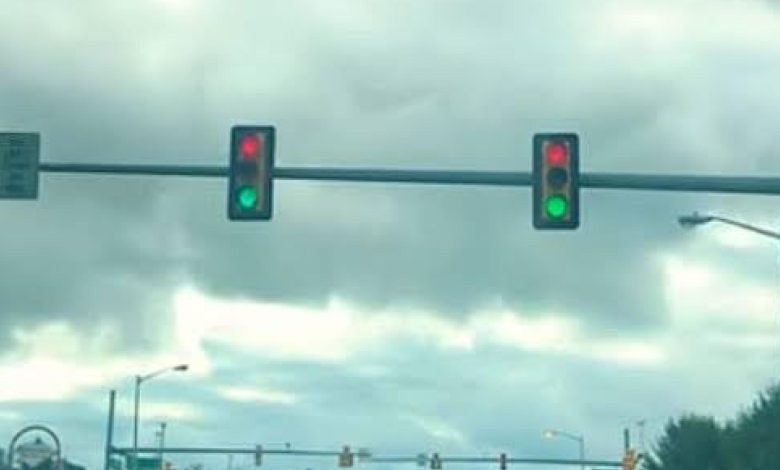
Across several intersections in Abuja, motorists increasingly encounter signals that operate inefficiently or inconsistently. Some lights hold red phases for prolonged durations despite minimal cross-traffic.
Others transition abruptly, compressing reaction time and increasing rear-end collision risk. In certain corridors, signals lack synchronisation, forcing vehicles to stop repeatedly within short distances even where road geometry supports smooth progression.
Drivers respond to what they perceive. When a signal appears ill-timed or irrational, frustration sets in. Repeated exposure to inefficient sequencing gradually alters behaviour. Motorists begin to interpret rather than obey. They inch forward on red. They accelerate through amber. Some cautiously proceed during off-peak hours when they judge the risk to be low.
Traffic systems depend on shared expectations. Each driver approaching a green light assumes cross-traffic will stop. When one motorist interprets the signal as optional while another assumes strict compliance, collision probability rises sharply. Side-impact crashes at signalised intersections often occur not because signals fail mechanically, but because behavioural trust erodes.
An unregulated signal does not simply inconvenience; it weakens compliance culture.
MAINTENANCE: THE SILENT DETERMINANT OF SAFETY
Traffic lights require continuous professional maintenance. Electrical systems degrade over time. Sensors misalign. Inductive loops embedded beneath asphalt lose calibration. Software timing cycles drift from optimal sequencing. Without routine audits and recalibration, even newly installed systems begin to underperform.
In Abuja, some intersections visibly operate with inconsistent timing logic. Pedestrian phases sometimes appear misaligned with traffic density. Certain junctions display sequencing delays that do not correspond to real-time vehicle volume. These distortions generate confusion and inefficiency.
Primary responsibility for traffic signal regulation lies with the Directorate of Road Traffic Services under FCTA oversight, working alongside the Federal Road Safety Corps. Effective regulation requires more than enforcement presence. It demands data-driven traffic studies, corridor synchronisation audits, night-mode programming, and adaptive timing adjustments.
ECONOMIC AND ENVIRONMENTAL CONSEQUENCES
The cost of unregulated signal systems extends beyond road safety. Vehicles idling unnecessarily burn fuel inefficiently. In a city where fuel cost directly influences transport fares and logistics pricing, prolonged stoppages impose economic burdens on households and businesses alike.
Repeated stop-and-go cycles increase engine wear and elevate maintenance costs for commercial fleets. Delivery timelines stretch. Commuters lose productive hours. Congestion compounds along corridors that should flow efficiently, particularly during peak hours along Nyanya entry routes and Kubwa–Central Business District corridors.
Environmental implications follow closely. Idling engines increase carbon emissions and particulate pollution. Abuja’s reputation as a modern capital demands sustainability consciousness. Poorly regulated signals quietly undermine that ambition.
KIGALI: A COMPARABLE CAPITAL BENCHMARK
Kigali offers a useful comparative model. Like Abuja, Kigali functions as a planned capital with expanding urban density. Rwanda’s transport authorities coordinate signalised intersections through synchronised corridor timing and adaptive programming.
Major corridors operate on coordinated “green wave” systems that allow vehicles travelling at regulated speeds to pass through successive intersections without unnecessary stoppage. During low-traffic hours, some intersections shift to flashing amber rather than enforcing rigid cycles. Centralised monitoring enables real-time timing adjustments in response to congestion spikes or special events.
Drivers comply because the system behaves logically. Efficiency reinforces discipline. When motorists experience rational sequencing, they trust the infrastructure and adhere to it.
Abuja has made commendable progress in infrastructure deployment. To protect lives, conserve fuel, and sustain order, it must now prioritise intelligent regulation and continuous maintenance. In a growing capital, discipline must not depend on improvisation. It must be engineered with precision.