BY BABAJIDE FADOJU
There is a version of Nigerian federalism that shows up mostly in speeches: state governors thanking the president for one thing or another while very little changes on the ground.
Then there is the version now visible on the ground in Benue State, where a run of major infrastructure projects is moving forward precisely because federal money and state execution are working in the same direction at the same time. Three projects from the governor’s recent media tour make the case better than any communique could.
THE LAFIA BYPASS: 500 KILOMETRES OF REGIONAL AMBITION
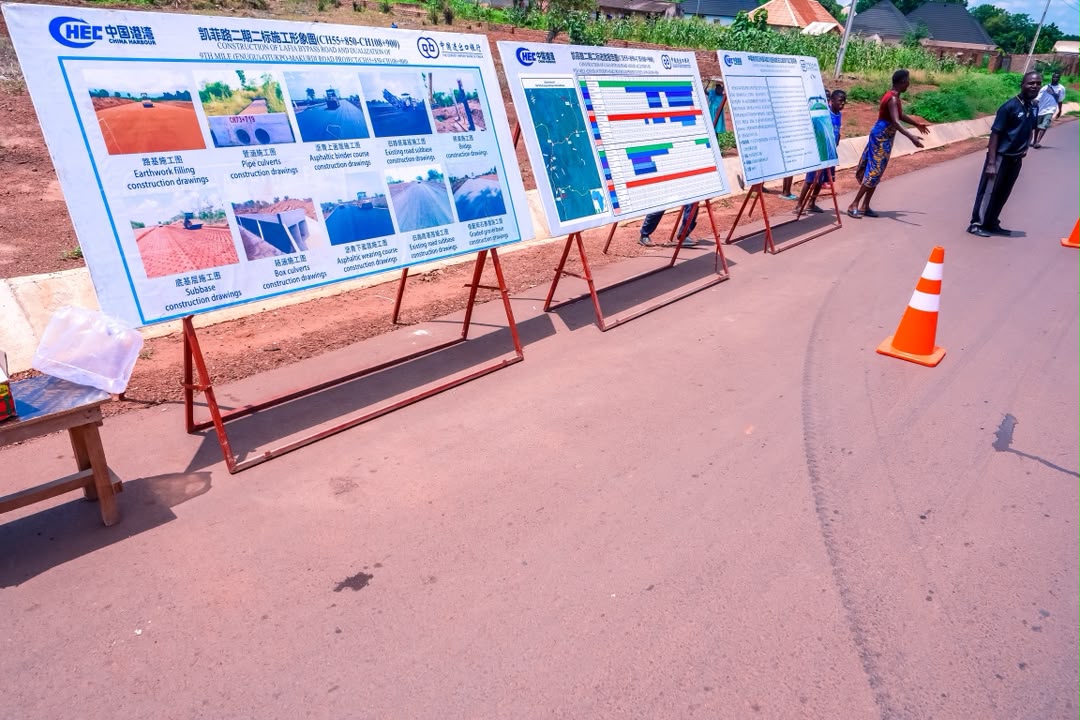
The most striking of the three is the Lafia Bypass, a 500-kilometre road project designed to connect Benue with Nasarawa, Kogi and Enugu States, with completion targeted for February 2028. A road of this scale is not a state government’s idea of a local project. It is a corridor, and corridors are exactly where federal and state interests naturally align.
Benue’s farmers grow the soybeans, citrus and grains. Nasarawa, Kogi and Enugu sit along the routes those goods need to travel to reach bigger markets. A bypass connecting all four states is the kind of project that only gets built when a state government with local priorities and a federal government with a national transport agenda are pulling in the same direction. That the road is already under construction, rather than still on paper, says something about how well that alignment is currently working.
Governor Alia’s own account of the transformation is worth noting. The Makurdi to Abuja run, once a five-and-a-half-hour trip, is now under three hours because of federal road investment. That single change reshapes what is economically possible for Benue: fresh produce, from oranges to yams, can now reach the capital while still fresh, and the state is already talking about opening a Benue farm market in Abuja to take advantage of it. None of that is possible without both levels of government building toward the same map.
THE AWAJIR-OJU ROAD: 52 KILOMETRES WITH LOCAL REACH
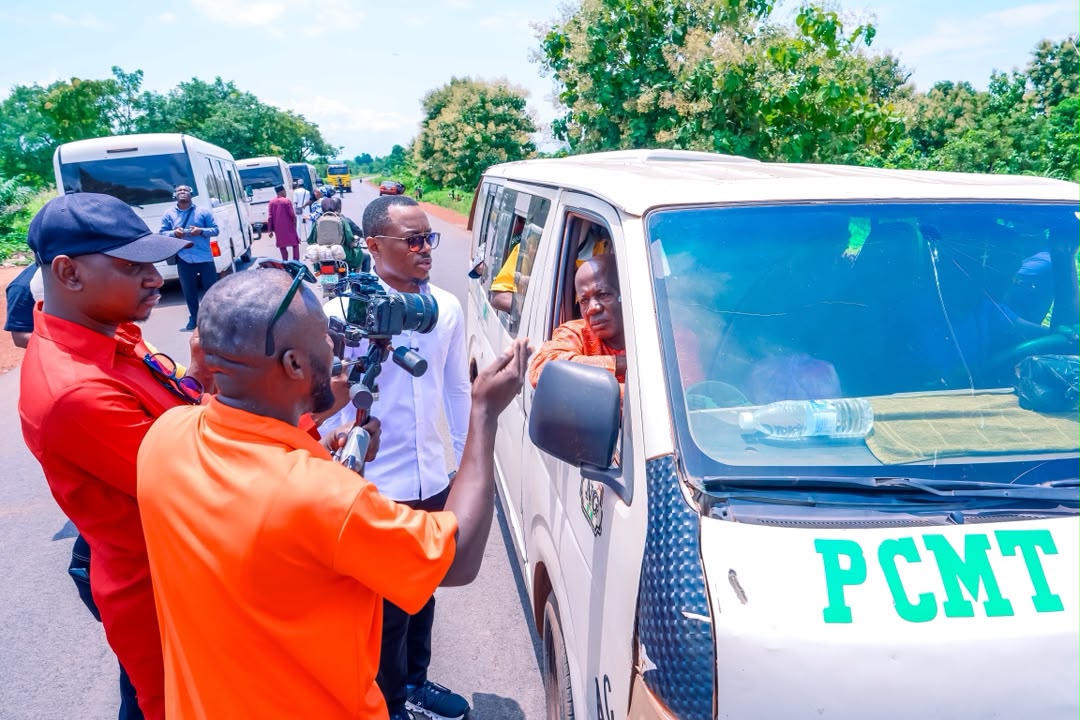
Where the Lafia bypass tells a regional story, the 52-kilometre Awajir to Oju road tells a local one. Cutting across Gwer east, Konshisha and Oju local government areas, this road is squarely in the category the governor described as people-driven: built to solve the problems that market women, farmers and commuters actually raised, rather than problems imagined from a government house. It links directly into the state’s wider agricultural push, since produce grown across those three local government areas has to reach processing points and markets before it has any economic value at all.
This is also a project that reflects the broader federal support the state has leaned on. Governor Alia was candid at his parley that federal allocations have made the difference in what the state has been able to deliver, from primary healthcare upgrades to the underpasses and roads that residents can now see, touch and use. The Awajir to Oju road sits comfortably in that pattern: a project scaled to a state budget, executed with the durability standards Alia has made his signature, and made possible in part because federal transfers freed up the fiscal space to build it properly rather than cutting corners.
TARAKU MILLS AND THE FOOD ECONOMY
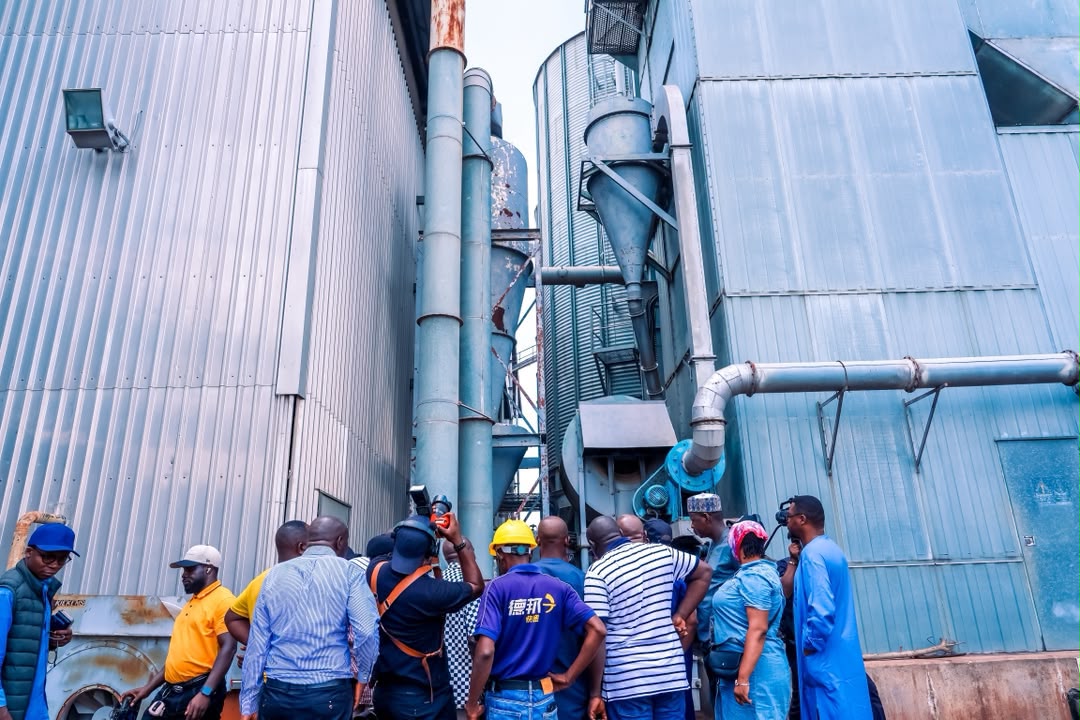
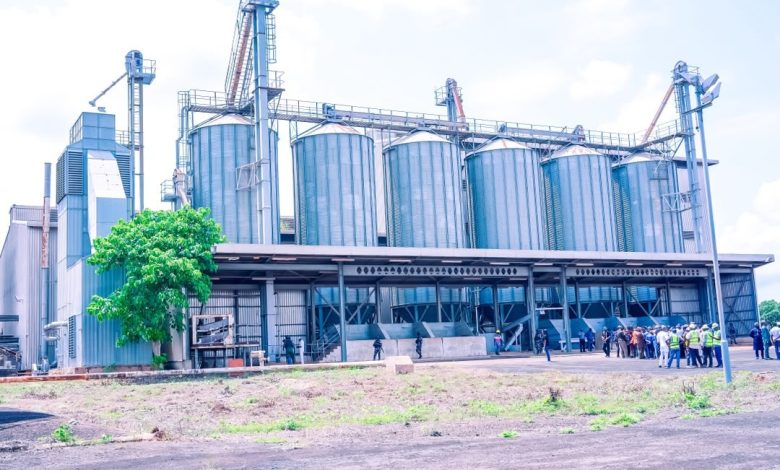
Roads only matter as much as what travels on them, and this is where the third piece of the story, the revival of Taraku Mills, connects directly back to the infrastructure. Benue was once Nigeria’s leading soybean producer before Taraku Mills collapsed, and its comeback is central to the governor’s plan to rebuild the state’s agricultural value chain rather than simply export raw produce. Alia described farm incentives already being distributed and new partnerships being negotiated with companies wanting a stake in the mill’s revival.
None of that works without roads capable of moving soybeans, citrus and grain at scale, both within Benue and out toward Nasarawa, Kogi, Enugu and Abuja. The Lafia Bypass and the Awajir to Oju road are not separate from the agricultural story.
They are the delivery system for it. A revived mill with no reliable road network is just a building. A mill connected to a 500-kilometre regional corridor and a network of local access roads is a functioning part of a national supply chain.
A MODEL WORTH WATCHING AS THE TOUR MOVES TO NASARAWA
What comes through clearly across all three projects is that Benue’s current wave of construction is not simply a state government spending its own resources. It is federal infrastructure funding and state-level execution moving together, with the state supplying land, local knowledge and construction standards, and the federal government supplying the fiscal muscle behind projects too large for any single state budget.
The Lafia bypass in particular makes that partnership literal, since it physically connects Benue to Nasarawa State, which is next up on this reporting tour. It will be worth watching whether that same federal-state rhythm shows up there too, since a bypass built jointly across two states is as good a test of real synergy as any single project can offer.
For a state marking 50 years of existence this year, the timing carries its own meaning. Benue is not simply celebrating an anniversary. It is building the roads and the food economy that the next fifty years will run on, with Abuja building alongside it rather than watching from a distance.
Governor Alia’s own account from the parley backs this up with specifics. He described distributing over eleven truckloads of fertiliser to farmers at subsidised rates, alongside cash incentives and farm inputs already reaching those who returned to soybean cultivation after Taraku Mills fell. He also pointed to citrus farmers now registered under cooperatives, a structure meant to give them a stable channel for state support to keep, expand and eventually profit from their orchards. These are not abstractions. They are the mechanics of a food economy being rebuilt farm by farm, ahead of the roads and the mill that will carry what those farms produce.
The federal contribution to this picture was something Alia raised unprompted. He credited the funding coming from Abuja with making possible the primary healthcare upgrades, the general hospitals, the Otobi Water Works and the series of roads and underpasses now visible across the state, adding that residents touring the state could see for themselves that the money had been translated into real projects rather than absorbed elsewhere.
He was equally direct about the human cost that shaped one of those projects, recalling the Okada riders and market women he had personally seen struck by trucks and trailers at Boko before the underpass was built, a memory he said stayed with him and drove the decision to fix that stretch of road.
He also framed the state’s approach to industrial partners in terms that came up in conversation with a French businessman during a trip abroad, who had asked why Benue exported raw soybeans rather than processing them locally.
Alia’s answer, as he recounted it, was that outside investors should bring their factories to Benue rather than the state continuing to ship out unprocessed produce, which is the same logic now driving talks with several companies interested in partnering on the revived Taraku Mills. Between the fertiliser trucks, the federal funding for hospitals and roads, and that exchange in France, the parley painted a state government working every part of the chain at once, from the farm gate to the factory floor to the road that connects them to Abuja and beyond.