Imo’s Digital City: A quiet revolution and true heartbeat of renewed hope agenda

BY BABAJIDE FADOJU
While roads, hospitals, convention centres and housing estates capture the headlines, it is the Imo Digital City, where 75,000 youths are being trained in digital skills, smartphones are being assembled locally, and drones are being deployed for security and logistics.
Across Imo State, the signs of transformation are impossible to miss. The reconstructed Owerri Okigwe and Owerri-Mbaise-Umuahia highways now carry traffic smoothly where potholes once swallowed vehicles whole. The new Imo Convention Centre, with its 10,000-capacity main hall, stands as a monument to the state’s ambition to host major events and attract investment.
The 200-bed infectious disease centre at the Imo State University Teaching Hospital, built in partnership with Seplat Oil and NNPCL, promises to serve the entire Southeast. The Renewed Hope housing estates are rising in Oninyang, Bende and across the country.
The Ukwa road, abandoned for eight years, is finally being reclaimed from the erosion that had cut it in two. But for those who look closely, the most significant development in Imo is not made of asphalt, concrete or steel. It is made of code, talent and youth, and it is happening at the Imo Digital City.
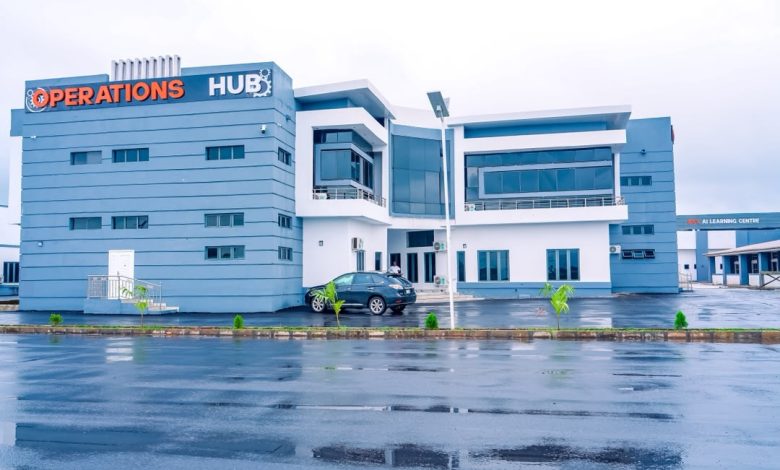
Located in Owerri, the Imo Digital City is the region’s innovation hub and digital entrepreneurship centre. It is the flagship project of Governor Hope Uzodimma’s vision for youth empowerment and digital transformation. During a recent tour, commissioner for digital economy and e-government, Chimezie Amadi, accompanied by the general manager, Stella Nkanza, walked visitors through the facility, showcasing its achievements.
Since its inception, the Digital City has trained over 75,000 Imo youths in diverse digital skills, from basic to intermediate and advanced. They are not just learning theory; they are building products. Inside the facility, young Imo indigenes are assembling smartphones and feature phones on a partial-knockdown assembly line.
These devices are being sold locally, reducing capital flight and promoting indigenous manufacturing. Amadi explained that most people in Imo state today come to the Digital City to buy their feature phones, smartphones, and other digital devices that are already assembled there. He added that the state is now exporting those talents, and they are helping other states to also advance when it comes to the digital economy.
The Digital City is home to software engineers, cloud engineers, cybersecurity experts, artificial intelligence engineers and Internet of Things specialists. Startups are being incubated there, solving real world problems. This is not a training centre for the sake of training; it is a talent factory producing the next generation of technology founders for Nigeria and Africa. The economic implications are profound. Instead of importing talent, Imo is grooming and exporting it. Instead of importing devices, Imo is assembling them locally. This is what digital sovereignty looks like.
But the Digital City is not resting on its achievements. It is already looking to the next frontier: drones, robotics and artificial intelligence. During the tour, officials revealed that the state is in discussions with IHS Towers to deploy drones for monitoring telecommunication towers.
One official noted that one of the reasons why the mobile network has problems is because of the amount of droppage on the towers. He explained that drones can be used to monitor those towers and report in real time, eliminating the need for someone to climb the tower. The application, he said, is widespread: security surveillance, delivery and logistics, mapping and more.
The first phase is security, but the vision extends far beyond that. Within the next five to six weeks, a demonstration is planned where a drone flying as high as an aircraft will be able to pick up somebody carrying a concealed weapon while in flight. The official confirmed that these solutions are there and that the team is working on them. This is not science fiction; it is the practical application of technology to solve everyday problems, and it is happening in Imo State.
The integration of technology into governance is a defining feature of the Renewed Hope Agenda. The Digital City is not an isolated project; it is the nerve centre of a broader ecosystem. The youths trained there will staff the hospitals, manage the convention centres, maintain the housing estates and drive the logistics that the new roads will enable. They will build the software that powers the state’s e-government initiatives. They will create the startups that attract investment and generate employment. The Digital City is the engine, and everything else, the roads, the hospitals, the housing, the airports, is the vehicle that carries Imo forward.
The physical infrastructure is equally essential. The roads are the arteries that connect the state. The Owerri Okigwe federal highway, a 56 kilometre stretch, had been a nightmare for years, with potholes, flooding and frequent accidents. The reconstruction, flagged off in November 2020 under the 3R Agenda, has transformed it into a smooth, well drained carriageway with clear lane markings and reinforced shoulders.
Travel time has been cut significantly, and transport union officials have reported that their members are saving thousands of naira weekly on repairs and tyre replacements. The Owerri Mbaise Umuahia road has received similar treatment, ending years of hardship for traders moving agricultural produce, poultry and cassava between the states.
The Ukwa road, a 31 kilometre stretch that crosses onto Anambra State, has a particularly dramatic history. Three governors prior to Governor Hope Uzodimma had made every effort to fix this road, especially the section where massive erosion had split the road into two.
For more than eight years, the Imo Abia section was completely cut off from Anambra. The current administration has undertaken massive reclamation, diverting a river and building concrete bridges. Now, with 80 percent completion, the road is almost ready. Contractors on site described the work: they have filled from the zero level, layer by layer, to reach a height of about 30 or 35 metres.
What remains now are minor finishing touches, and they promised that within two or three days, everything would be done. The economic implications are immense, as this road is a very important and strategic commercial hub linking the two states. Goods and services will now flow easily, boosting the economy of the entire Southeast region.
The funding for these road projects reflects a new model of federal state synergy. Officials clarified that the state would not be reimbursed for its expenditure on federal roads because the funds were already secured through federal engineering mechanisms. This is a departure from the old model of reimbursements, which often trapped states in endless paperwork and delays.
The new model is concurrent execution, with federal technical supervision and quality assurance ensuring that national standards are met. An official noted that this would not have been possible without the increased federation account allocation committee (FAAC) funds that have come monthly from the federal government since the removal of fuel subsidy.
States are no longer borrowing to pay salaries, and many have increased their minimum wage to 70,000, 80,000 and in Imo state, 100,000 naira. He contrasted Nigeria’s trajectory with Senegal, which removed subsidy and is now on its knees, while Nigeria has become a reference point for reforms in the oil and agricultural sectors because of the renewed hope agenda.
The new Imo Convention Centre is another landmark project. Managing Director of Benecos Group, Bennet Nwokejoli, who is handling the project, took visitors through the facility. The main hall alone has a capacity of 10,000 people, with two additional halls seating 500 each and an upstairs capacity of 200.
It is a multipurpose convention hall designed for conferences, concerts, social events and anything else the state can imagine. Nwokejoli was emphatic that this is a fresh project, not a renovation. He explained that the previous structure had collapsed on its own and had nothing to do with the government of the time. Now, with finishing touches underway, he promised that within seven days, the facility would be fully ready.
He had given the governor a promise that by the end of July they would be off, but they were within that timeline. The economic value of such a facility is immense; it positions Imo as a destination for major events, attracting visitors, investment and revenue.
Health infrastructure is equally transformative. At the Imo State University Teaching Hospital, Executive Assistant to the Chief Medical Director, Victor Samson, walked visitors through the changes. The hospital, established in 2004, had lost its accreditation for medical graduates, leaving six sets of medical doctors stranded. Governor Uzodimma stepped in, restored the accreditation, and those doctors finally graduated. Today, the hospital boasts a heart transplant facility, a 200-bed infectious disease centre built by Seplat Oil in conjunction with NNPCL, a modern oxygen plant that at one point supplied the entire south-east, and a 260 KV solar installation that keeps the facility fully lit.
Prior to the coming of the governor, sometimes the wards had only two or three patients. Now, each ward has about 20 beds and most of those wards are always filled up. Samson estimated inpatient inflow at about 40 to 60 a week. The free medical interventions every December have resulted in over 4,000 surgeries since the governor came in. Just last December, they did nothing less than 400 thyroidectomy surgeries within that period.
The infectious disease centre, though not yet operational, is at 85 percent completion. It is being cleaned and kept ready, a testament to the state’s preparedness for future health emergencies. The joint venture operators have been supervising the work, ensuring that standards are met.
This is not just about treating diseases; it is about creating a centre of excellence that will serve the entire Southeast. The hospital has also engaged very relevant consultants who are now coming back to serve the institution. Just recently, the chief medical director took in a paediatric surgeon, something that is lacking amongst healthcare facilities in Nigeria. All of these improvements have been made possible by the governor’s investment in modern equipment and infrastructure.
The Renewed Hope housing projects are also progressing across the state. In Oninyang Bende, a proposed 180 unit estate is being developed, facilitated by the Right Honourable Deputy Speaker, Benjamin Kalu. A federal official accompanying the tour explained that this is part of a nationwide effort.
Across the length and breadth of the country, the Renewed Hope housing projects are going on simultaneously in every geopolitical zone. Under the Renewed Hope agenda, development is spread across every part of the country.
The vision is that it does not bear tribal marks or ethnic marks. So long as you are part of a Nigerian state, development will reach you. He also noted that nearly 1,648 Nigerians are benefiting from mortgages worth close to 218 billion naira, a direct outcome of the economic reforms that have freed up funds previously used for subsidy payments.
Asked about delays in some projects, the official explained that it is a question of funds, given that the country is massive. What is important, he said, is that incremental progress is being seen, with projects in Kano at about 60 percent, in Abuja and other states at 45 percent, and in Imo at about 35 percent. As funds are made available, the projects will build up.
The Sam Mbakwe International Cargo Airport, another pillar of the renewed hope push, has also undergone rehabilitation. The runway has been resurfaced, the terminal has been expanded and the cargo section is now functional, handling exports of agricultural produce to other parts of Nigeria and beyond. A produce exporter told this reporter that the airport’s revival had cut his logistics costs by nearly a third. Before, he had to send his goods by road and they would arrive spoiled or damaged. Now, he can fly them out fresh and get better prices. The airport is also attracting new airlines, which means more competition and lower fares for passengers.
The federal state synergy extends to education as well. The College of Education is being upgraded to a full-fledged university, with new lecture blocks under construction, laboratories being equipped with modern instruments and a library being digitised. A lecturer who has taught there for 18 years said with visible emotion that the upgrade had restored morale among the faculty.
They were always treated as second class, he said, but now they are part of the national university system. Their research can be published and their students can compete. Declan Emelumba, the Imo commissioner for information and strategy, flanked by Tunde Rahman, senior special assistant on media and special duties to the president, expressed appreciation for the federal synergy on this project.
Rahman impressed upon everyone present the critical importance of the upgrade, tying it directly to the broader goals of the renewed hope agenda. Emelumba added that the partnership had been seamless, with the federal government providing the policy direction and part of the funding while the state handled the execution on the ground.
The renewal of the Federal University of Technology Owerri teaching hospital is another example of this partnership. The revamp has enabled the hospital to resume postgraduate medical training, which had been suspended for years. The renovation is visible everywhere: new diagnostic equipment, refurbished operating theatres, a functional blood bank and an emergency unit that actually has supplies.
A young mother in the paediatric ward told this reporter that she had brought her child with severe malaria, expecting to be referred to a private clinic. Instead, she received prompt treatment and the child was recovering well. She did not have to sell her furniture this time, she said, laughing through tears. This is not just about bricks and mortar; it is about saving lives and training the next generation of doctors.
What ties all of these projects together is the funding and policy environment created by the Renewed Hope Agenda. The removal of fuel subsidy, which drew fierce criticism at the time, has freed up billions of naira that were previously being borrowed to pay for subsidies. The increased FAAC allocations have given states the fiscal space to undertake massive projects without resorting to endless borrowing. The federal state synergy is evident everywhere, from the roads where both governments are co-funding, to the university upgrade where federal policy supports state execution, to the health facilities where federal agencies and private sector joint ventures are partnering with the state.
But perhaps the most important element is the human one. At every stop, young people are being trained, employed and empowered. The Digital City is producing software engineers who are being exported to other states. The convention centre will create jobs for event managers, caterers, security personnel and maintenance staff. The housing estates will provide affordable homes for families. The hospitals are saving lives and training the next generation of doctors. The roads are connecting communities and reviving commerce. This is not abstract development; this is development that touches lives.
Of course, challenges remain. Some projects are still at 35 percent completion, and funds will need to be sustained. The infectious disease centre is not yet operational. The Ukwa road still has finishing touches. But the trajectory is clear.
As one official put it, vision without clarity, without results, turns to visionless completely. But here we see vision. We see clarity in the manifestation of the projects we are seeing. That vision, sustained and replicated, could transform not just Imo but the entire south-east and beyond.
From drones to digital hubs, from roads to heart centres, Imo is becoming a living laboratory of what is possible when the Renewed Hope Agenda moves from policy papers to physical reality. And from what this reporter has seen, that reality is already improving lives. That is not a slogan. That is a fact.