Tunji Alausa, minister of education, says more than 8,000 schools have been rehabilitated and over 1.2 million out-of-school children have been enrolled back into classrooms under the education reforms introduced by the administration of President Bola Tinubu.
Speaking in Abuja Wednesday at the 2026 Education Correspondents’ Association of Nigeria (ECAN) summit, Alausa said the administration’s reforms are beginning to yield measurable results across basic, technical and tertiary education.
The summit, themed “Three years of the Tinubu administration: Assessing reforms, progress and challenges in Nigeria’s education sector,“ brought together policymakers, education stakeholders and journalists to evaluate progress in the sector.
Alausa said the government’s education agenda is anchored on six priority areas: technical and vocational education, science and technology education, reducing the number of out-of-school children, expanding access to education, improving quality assurance, and strengthening data-driven planning.
The minister said the federal government has invested nearly N100 billion over the past two years to revitalise technical and vocational education and training (TVET).
According to him, more than 115,000 students are currently undergoing training in about 1,600 accredited skills centres nationwide.
He said trainees receive monthly stipends of between N25,000 and N30,000, while many would also receive starter packs worth up to N1 million after graduation to encourage entrepreneurship and job creation.
Alausa described TVET as a critical intervention to tackle youth unemployment and bridge Nigeria’s skills gap.
‘UNIVERSITIES NOW ENJOY UNINTERRUPTED ACADEMIC CALENDARS’
The minister also said sustained engagement with university-based unions has restored stability to public tertiary institutions.
“For the first time in many years, students admitted into four-year programmes are completing them within four years,” he said.
He added that 24 Nigerian universities are now ranked among the world’s top 1,000 institutions, up from 21 previously, with 17 of the institutions being public universities.
Alausa said government policies are increasingly being driven by evidence generated through the 2024/2025 annual school census.
He disclosed that the census revealed Nigeria has about 25 million pupils in primary schools but only five million students enrolled in junior secondary schools, indicating that nearly 20 million children fail to transition to the next level of education.
According to him, the findings also showed that while Nigeria has about 90,000 primary schools, there are only about 16,000 junior secondary schools, making inadequate access a major contributor to school dropouts.
He urged journalists to use education data to hold state governments accountable for improving classroom infrastructure, teacher-to-student ratios and access to quality education.
The minister also challenged governors and local government chairmen to prioritise investments in basic education using evidence generated through the government’s digital education management information system (DEMIS).
Alausa said poverty accounts for more than 90 percent of school dropout cases in Nigeria, making it a far greater challenge than insecurity.
To address the problem, he said the federal government has expanded social protection programmes targeted at vulnerable households.
The initiatives include the HOPE basic education programme, the adolescent girls initiative for learning and empowerment (AGILE), and the Nigeria community action for resilience and economic development (NG-CARES) programme.
He said the interventions, backed by billions of dollars in international financing, would provide conditional cash transfers, school supplies, transportation support and other incentives to keep children—especially girls—in school.
ECAN URGES ACCOUNTABILITY IN EDUCATION REPORTING
Earlier, Chux Ukwuatu, chairman of ECAN, said the summit offered stakeholders an opportunity to undertake an honest assessment of the Tinubu administration’s education reforms.
He urged journalists to continue promoting accountability through balanced, evidence-based reporting.
Ukwuatu said Alausa has championed key reforms, including the establishment of the Nigeria education data infrastructure, the education sector review initiative, and proposals to restructure Nigeria’s basic education system into an uninterrupted 12-year model to improve retention and reduce school dropouts.
He also commended the minister for suspending the proposed increase in WAEC examination fees following public concerns.
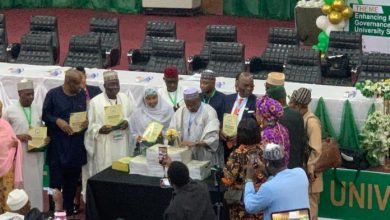
During the event, Alausa received the ECAN award for outstanding leadership in education transformation in recognition of his contributions to reforming the sector.
Also speaking, Suwaiba Ahmad, minister of state for education, said ongoing reforms are focused on improving learning outcomes, with teacher quality remaining central to the administration’s agenda.
Grace Ike, chairperson of the Nigeria Union of Journalists (NUJ), FCT Council, described education as the foundation of national development and urged journalists to continue amplifying the voices of teachers and learners while promoting policies that strengthen the sector.
Aisha Garba, executive secretary of the Universal Basic Education Commission (UBEC), reaffirmed the commission’s commitment to supporting reforms aimed at delivering more inclusive, accessible and quality education across the country.