Committee of VCs challenges universities to strengthen global grants capacity for sustainability


The committee of vice-chancellors of Nigerian universities (CVCNU) has challenged universities in the country to strengthen their capacity for international grants acquisition and strategic resource mobilisation to remain competitive, globally relevant and financially sustainable in a rapidly evolving academic environment.
Andrew Haruna, secretary-general of the CVCNU, alongside Ken Oguzie, managing director and chief executive officer (CEO) of Optimal Delivery Solutions Projects and Corporate Services Limited (ODS), spoke in Abuja at a collaborative research workshop.
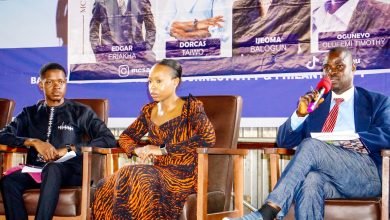
The workshop, themed “Unlocking global funding: Resource mobilisation and international grantsmanship for Nigerian universities,” brought together stakeholders to explore strategies for strengthening institutional capacity and enhancing global competitiveness among Nigerian universities.
Speaking on eligibility and institutional readiness, Haruna said the global academic landscape has shifted significantly, with leading universities increasingly relying on competitive grants to drive innovation, research output, and institutional growth.
He noted that although Nigerian universities are eligible for global funding, many still face capacity gaps that hinder their ability to access and manage international funding opportunities effectively.
According to him, these challenges include weak proposal development, poor alignment with donor priorities, limited institutional frameworks for grants acquisition, and inadequate collaboration among institutions.
“For many universities, reliance on government subventions remains dominant, while alternative funding opportunities—through international grants, industry partnerships, and collaborative research networks—are not fully explored or strategically pursued,” he said.
Haruna described the workshop as timely, noting that it would provide participants with practical approaches to strengthening institutional capacity for resource mobilisation, building effective partnerships, and improving grantsmanship practices.
He also urged Nigerian universities to align their research priorities with global development goals while maintaining strong Nigerian and African perspectives.
“Our expectation is that participants will leave this workshop with practical strategies that can help their institutions move from occasional grant success to a more structured and sustainable culture of research funding and resource mobilisation,” he added.
Speaking to journalists after the programme, Oguzie identified three strategic shifts Nigerian universities must adopt to attract global funding.
He said institutions must move from individual efforts to institutional strategies, from local thinking to global relevance, and from competition to collaboration, noting that global funders increasingly prioritise solutions addressing climate change, food security, artificial intelligence, public health, and inclusive development.
“Grant writing is not merely a technical skill; it is a strategic capability,” he said.
“I encourage vice-chancellors to take leadership in this area. When leadership prioritises grants, the institution follows.”
Oguzie emphasised that modern research must align with global priorities while offering uniquely Nigerian and African perspectives to enhance global relevance.
He added that collaboration remains a critical factor in successful grant acquisition, noting that partnerships across universities, countries, and disciplines significantly improve funding success rates.
“The most successful grants today are collaborative—across universities, across countries, and across disciplines. Nigerian universities must actively seek partnerships within Africa and internationally,” he said.
Akanimo Odon, director of global engagement and lead consultant at ODS, highlighted sustainable strategies for grants sourcing, stressing the importance of international partnerships and intra-university collaboration.
Joy Ezirim, research officer and CVCNU facilitator, emphasised the need for Nigerian universities to strengthen their institutional branding and global online presence to remain visible and competitive in today’s academic landscape.
She said participants were equipped with practical tools and strategic insights to navigate global funding ecosystems, strengthen internal grantsmanship structures, and build sustainable partnerships with international funding bodies.
Ezirim added that the workshop also provided opportunities for networking, peer learning, and inter-university collaboration aimed at expanding participation in international research funding opportunities.