‘His legacy of service and sacrifice endures’ — Tinubu pays tribute to Buhari


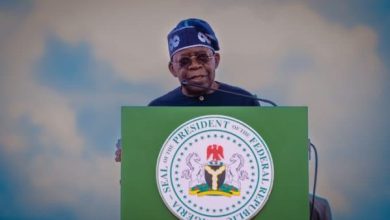
President Bola Tinubu has eulogised the late former President Muhammadu Buhari, noting that his ” legacy of service and sacrifice endures”.
In a statement he personally signed, Tinubu said he received the death of his predecessor with “profound sorrow and a heavy heart”.
Buhari died today in London at about 4.30 pm, following a prolonged illness.
The president described Buhari as a “patriot, a soldier, a statesman”.
“It is with profound sorrow and a heavy heart that I received the news of the passing of His Excellency, Major General Muhammadu Buhari (Rtd), GCFR, my predecessor, who departed this life today, Sunday, July 13, 2025, at a hospital in the United Kingdom,” the statement reads.
“President Buhari was to the very core, a patriot, a soldier, a statesman. His legacy of service and sacrifice endures.
“He served Nigeria with unwavering dedication, first as a military leader from January 1984 to August 1985, and later as a democratically elected President from 2015 to 2023. Duty, honour, and a deep commitment to the unity and progress of our nation defined his life.
“He stood firm through the most turbulent times, leading with quiet strength, profound integrity, and an unshakable belief in Nigeria’s potential. He championed discipline in public service, confronted corruption head-on, and placed the country above personal interest at every turn.
“In this moment of national mourning, I extend my deepest condolences to his beloved wife, Aisha, with whom I have been in constant touch, his children, the entire Buhari family, and all who knew and loved him.
“I also extend my condolences to the government and people of Katsina State, most especially the people and traditional leaders of Daura Emirate.
“We honour his service. We reflect on his legacy. And we pray for the peaceful repose of his soul.
“As a mark of respect to our former leader, I have directed that all national flags fly at half-staff across the country for seven days from today.
“I have also summoned an emergency Federal Executive Council session on Tuesday, dedicated to his honour.
“The Federal Government will accord President Buhari full state honours befitting his towering contributions to our country.
“May Allah forgive his shortcomings and grant him Al-Jannah Firdaus.
“And may his life continue to inspire generations of Nigerians to serve with courage, conviction, and selflessness.”