Jonathan very safe, out of Guinea-Bissau after military coup, says foreign affairs ministry

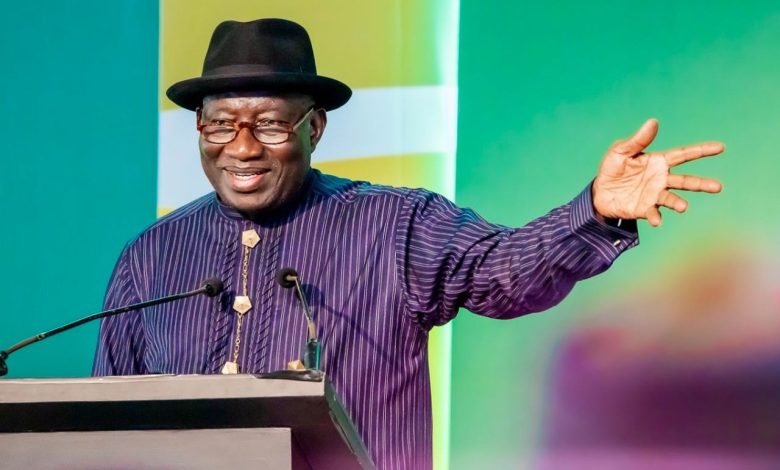
The federal ministry of foreign affairs says former Nigerian President Goodluck Jonathan has safely departed Guinea-Bissau after a military coup overthrew the government in the West African nation.
The ministry confirmed that Jonathan left on a special flight with members of his delegation, including Ibn Chambas.
“Former President Goodluck Ebele Jonathan is very safe and out of Guinea-Bissau,” the ministry spokesperson Kimiebi Ebienfa said on Thursday.
Jonathan was in the country as chair of the West African Elders Forum (WAEF) election observation mission, monitoring the presidential and legislative elections held last Sunday.
On Wednesday, military officers in Guinea-Bissau took “total control” of the country, suspended the electoral process, and closed borders, three days after the polls. Incumbent President Umaro Embalo, who had been favoured to win the election, was arrested.
Denis N’Canha, a general and head of the presidential military office, told journalists that a command “composed of all branches of the armed forces, was taking over the leadership of the country until further notice.”
On Thursday, the military appointed Horta N’Tam, chief of staff of the army, as the country’s leader for a one-year term.
The Nigerian government condemned the coup, describing it as “unfortunate” and demanding the restoration of democratic order.
“The Federal Government of Nigeria, in the strongest possible terms, condemns this act of military insurrection which undermines democratic progress, constitutional order, and stability not only of Guinea-Bissau but of the entire West African sub-region,” said Ebienfa.
He added that the coup violated the ECOWAS Protocol on Democracy and Good Governance and called for the immediate restoration of constitutional order and the safety of detained officials.
Election observers from the Economic Community of West African States (ECOWAS) and the African Union (AU) also expressed concern, calling on the military to release detained officials.
In a joint statement, observers including Jonathan, Filipe Jacinto Nyusi of Mozambique, and Issifu Baba Braimah Kamara of ECOWAS condemned the disruption.
“We deplore this blatant attempt to disrupt the democratic process and the gains that have been achieved thus far. We request the African Union and the ECOWAS to take the necessary steps to restore constitutional order,” the statement reads.