OPINION: AES junta leaders racing into uncharted territory
The three countries, which now go by the Alliance of Sahel States, under the French acronym (AES), also accused the regional bloc of failing to support them in their fight against terrorism and being teleguided by foreign powers, particularly France.

By Paul Ejime
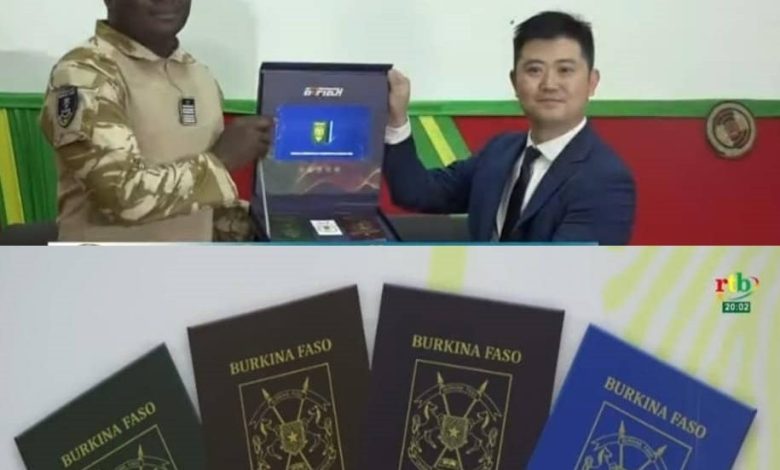
The latest decision by the Burkina Faso junta to remove the ECOWAS logo from the country’s international passport is another move that casts serious doubts on that regime’s critical thinking and sincerity of purpose.
In January this year, the military rulers of Mali, Burkina Faso and Niger decided to pull their countries out of ECOWAS, because of what they called “inhuman sanctions” it imposed on the three nations after army takeovers of their governments.
The three countries, which now go by the Alliance of Sahel States, under the French acronym (AES), also accused the regional bloc of failing to support them in their fight against terrorism and being teleguided by foreign powers, particularly France.
Ironically, the three have retained membership in the eight-nation West African Economic and Monetary Union, UEMOA set up by France, to compete with ECOWAS.
The eight are ECOWAS members with a common Central bank, BCAO based in Dakar, and all use the franc’s CFA currency controlled by the French Treasury.
The three junta rulers – Brig.-Gen. Abdourahmane Tchiani (Niger), Col Assimi Goita (Mali) and Capt. Ibrahim Traore (Burkina Faso) – are making populist revolutionary noises, basically riding on the crest of anti-French sentiments by the population in Francophone countries.
They profess Pan-Africanism, but while it was convenient for them to sever relations with ECOWAS, an African organisation, they are comfortable with foreign powers such as Russia and China.
Moscow is providing them with military support, through its private military group, Wagner, which suffered major casualties during a July ambush by the Tuareg separatist group in northern Mali.
Recently, clashes between terrorist groups and Burkina Faso forces reportedly killed some 200 people, including soldiers and civilians in the north of the country.
The story is not different in Niger or Guinea, the fourth military-ruled country, all suspended by ECOWAS.
If the allegation of lack of progress in the anti-terror campaign was the reason for the military takeover of governments in the four countries the security situation has not improved or has even grown worse in some cases after the military seized power.
Another inconsistency is that a Chinese firm won the almost 20 billion francs CFA contract to print the new national passport without the ECOWAS logo for the Burkina Faso junta regime.
According to the Minister of Security, Mahamadou Sana, the new passport meets the International Civil Aviation Organisation (ICAO) standards. It also contains several innovations, such as an electronic chip with more data storage capacity and state-of-the-art security features.
Granted that ECOWAS made some mistakes in the sweeping and punishing sanctions it imposed on Niger after the military coup in that country, coupled with the threat by the regional bloc to use military force to restore constitutional order in that country.
Even so, military rule is an aberration in today’s world. Also, the four coups were not the first in the region, which ECOWAS had handled with greater maturity.
However, the difference was that without exhausting all the preventive diplomacy options in the regional protocols, some ECOWAS leaders, in their morbid fear of losing power went into panic mode threatening fire and brimstone against Niger.
Nigeria, the regional powerhouse, compounded the situation by cutting the electricity power supply to Niger as part of the ECOWAS sanctions, even though the electricity supply was covered by a bilateral accord, which has nothing to do with ECOWAS.
But having realised its mistakes, ECOWAS pulled back on the use of military force in Niger and also lifted all the regional sanctions, while the junta leaders have remained recalcitrant.
The recent visit by Nigeria’s Chief of Defence Staff Gen. Christopher Musa to Niger, where he held talks with his counterpart and reiterated that the people of both countries were brothers and sisters, was instructive.
Those affinities should have been put in contemplation before the ill-advised decision to invade Niger militarily, but nobody or organisation is above mistake.
Since ECOWAS has extended the olive branch, the junta leaders ought to climb down from their populist horses to engage in dialogue because given the geographical location of their land-locked countries, their citizens would be hardest hit if their countries were to leave ECOWAS.
The global trend and conventional wisdom are for countries to pull together, and maximise the benefits of numbers, since no country can go it alone, no matter how big or powerful.
The three AES countries have made their point. Their withdrawal has political, economic, trade and security implications for the restive ECOWAS and Sahel region.
Similarly, the tangible and intangible benefits from their continued membership of ECOWAS will far outweigh whatever temporary gains they would make from leaving ECOWAS.
For instance, removing the ECOWAS logo from their national passports, as Burkina Faso has done, means that their citizens can no longer enjoy the visa-free benefits under the regional Free Movement of Persons, Goods and Services and the right to Residence and Establishment.
Also, what happens to millions of their citizens in ECOWAS countries and vice versa?
Terrorism is a transnational crime. If under ECOWAS the three countries could not defeat terrorism, what is the guarantee that it would be easier for just three countries?
As sovereign nations, it is within their right to form and belong to any association or alliance, just as several other groups currently do within ECOWAS, such as UEMOA, the Mano River Union, the Zone of Prosperity, and the Lake Chad Commission/Authority.
The three countries have up to the end of December this year as a window of opportunity to rethink their position. Under ECOWAS protocol, notice of withdrawal by any country only takes effect after 12 months as happened with Mauritania, which served notice in 1999 and left in 2000 but is now making moves to return.
By insisting on leaving ECOWAS without justifiable reasons, the junta leaders could vindicate the position of critics who see them as opportunistic power grabbers, who do not want to subject themselves to democratic scrutiny by ECOWAS.
Their lack of progress with transition programmes, and the injection of the clause that they are eligible to contest elections during the transition period, contrary to provisions of the ECOWAS and African Union protocols raise questions about their sincerity of purpose.
For instance, the Mali junta has spent four years in power without concrete movements to constitutional rule.
At the same time, ECOWAS leaders must re-examine their governance attitudes, which have encouraged military incursions into politics in the region.
These include the sit-tight syndrome, repression and clampdown on the opposition, human rights violations, shrinking of the democratic space, intolerance of alternative views, “constitutional and ballot coups,” corruption and nepotism.
These are all elements of bad governance, that must end. ECOWAS leaders should also purge themselves of “fifth columnists” among their ranks, who are secretly advising or cosying up to the junta leaders, thereby sabotaging efforts at regional integration.
Another potential danger is the latest decision to reactivate the ECOWAS Standby Force, without interrogating why the existing Standby Force is not working.
The committee of chief of defence staff after its recent meeting, at the behest of the Heads of State and Government, proposed a two-tier Standby Force, of 5,000-strength at full complement, estimated to cost US$2.6 billion “to fight terrorism and unconstitutional change of government.”
Any genuine measures to fight terrorism should be welcome.
However, raising the troops and the funds in a difficult economy when many ECOWAS member states cannot pay their Community Levy is another matter.
The greatest worry is that the standby force idea, which gained traction after the Niger coup and the later abandoned decision to intervene militarily, is seen by critics as a ploy to maintain political leaders in power instead of fighting terrorism.
Two member States – Guinea Bissau and the Gambia – are already hosting ECOWAS military missions and Sierra Leone’s President Julius Maada Bio, dealing with the 2023 disputed presidential election fallouts has also requested a third ECOWAS Mission.
A thorough examination of the terms of reference of current ECOWAS missions shows that they are deployed to defend and maintain government officials in power, rather than the defence or protection of the host country’s sovereignty.
This anomaly must be rectified and so too, the contradiction of democratic governments using the military to maintain themselves in power.
Instead of wasting scarce resources on weapons for military missions or a Standby Force, ECOWAS leaders should deliver and consolidate good governance and eliminate disaffections, corruption, mass poverty amid extravagant living by government officials, inequalities, neglect or deprivation and other bad governance enablers.
Ejime is an author, global affairs analyst, and consultant on peace and security and governance communications.