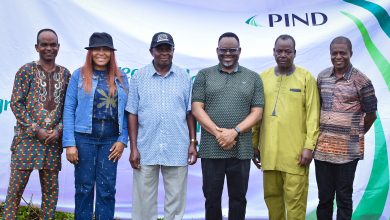
PIND launches platform to strengthen Niger Delta host-community development


The Foundation for Partnership Initiatives in the Niger Delta (PIND) has launched a national multi-stakeholder platform to address governance gaps in Host Community Development Trusts (HCDTs) and strengthen the implementation of the Petroleum Industry Act (PIA) across the Niger Delta.
The platform, inaugurated in Port Harcourt, Rivers state capital, on Thursday, October 8, brings together host communities, state governments, regulators, civil society organisations, oil companies and development partners to promote transparency, accountability and community participation in development planning.
Established under PIND’s CONNECT Project in partnership with the Ford Foundation, the platform will also focus on climate-responsive development, regulatory collaboration, conflict sensitivity and evidence-based decision-making.
At the inauguration, members established the platform’s leadership structure and agreed on its operating arrangements, priorities, responsibilities and timelines.
Sam Ogbemi Daibo, PIND executive director, said the platform was designed to drive practical action rather than create another forum for discussion.
“The real test of this platform will be what happens after today, whether stakeholders follow through on agreed priorities, share evidence, resolve issues early and improve development outcomes for host communities,” Daibo said.
He said PIND would provide secretariat and technical support, while the platform’s effectiveness would depend on the commitment, participation and accountability of its members.
The CONNECT Project builds on lessons from PIND’s Bridges Project and seeks to scale approaches that support community-led development.
Its priorities include establishing national and state-level stakeholder platforms, strengthening engagement with government and regulators, integrating climate and environmental sustainability into Community Development Plans, and improving monitoring, evaluation and learning systems.
Prof. Obafemi Ajibola, who delivered the stakeholder response at the inauguration, said sustained collaboration was necessary to translate the PIA’s provisions on host communities into stronger institutions and tangible development outcomes.
“No institution or stakeholder group can close these gaps alone. This platform gives us a shared mechanism to surface challenges, learn across sectors and agree who will do what and by when to strengthen trust, accountability and delivery,” Ajibola said.
The platform will operate through a plenary, a steering committee and time-bound technical working groups.
PIND will serve as its secretariat, coordinating activities, documenting decisions and tracking agreed actions, while members and the platform’s leadership will drive implementation.
State-level engagements and technical reviews are expected to follow as the CONNECT Project progresses.