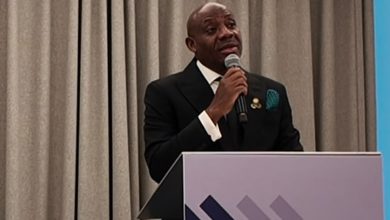
The federal government says it is fully committed to transforming teaching and learning in Nigeria’s basic education sector through digital technology.
Tunji Alausa, the minister of education, spoke in Lagos during the official launch of the digitalisation of public schools’ initiative and the flag-off of the nationwide distribution of interactive smart boards to public schools.
The initiative, driven by the Universal Basic Education Commission (UBEC), aims to expand access to quality, technology-enabled education and equip Nigerian children with 21st-century learning tools.
“Today’s event is more than a technological upgrade; it is a bold declaration that Nigeria is ready to embrace the future of learning,” Alausa said.
“Our goal is to ensure that every child, regardless of background or location, has access to quality, modern, technology-enabled education.”
He added that the programme aligns with President Bola Tinubu’s renewed hope agenda, which places education at the heart of national development.
Alausa said the federal government is reimagining Nigeria’s classrooms to meet the demands of the digital economy and nurture a globally competitive, knowledge-driven society.
“Education must evolve with the world of work, innovation, and national competitiveness. That is why we are embedding AI, EdTech, and digital literacy across curricular, ensuring our youth are equipped with STEMM, data, and coding skills for the future,” he said.
According to him, the introduction of smart boards marks a shift from traditional chalkboards to interactive, technology-driven classrooms that promote creativity and critical thinking.
“These smart boards will allow teachers to integrate multimedia, digital textbooks, and real-time interaction into their lessons. Learners will learn by touching, exploring, and engaging — not just listening,” he added.
The minister commended UBEC and the state universal basic education boards (SUBEBs) for their collaboration in implementing the digital transformation agenda, citing notable achievements such as distribution of over 1,000 interactive smart boards nationwide, with accompanying teacher training.
Others are provision of 140 talking computers for learners with visual impairments and supply of 250 desktop computers for second chance schools to support ICT-enabled learning for out-of-school youth;
Aisha Garba, UBEC executive secretary, described the initiative as a milestone in Nigeria’s journey toward digitalizing basic education.
“It demonstrates our commitment to ensuring that no child, teacher, or school is left behind in the ongoing global digital revolution,” she said.
Garba emphasized that digital transformation has become the foundation of progress across all sectors and that education must evolve accordingly.
“Teachers will now be able to integrate multimedia content, simulations, and real-time feedback during lessons. Pupils can engage more actively — touching, responding, and participating in ways that make learning memorable,” she added.
She highlighted other ongoing programmes under the ministry’s digital transformation agenda, including the BESDA-AF Initiative, under which over 60,000 tablets have been distributed to teachers across the country.
Garba also listed collaboration with NITDA to develop a digital literacy curriculum and train teachers nationwide and the establishment of digital learning centres and a department for data and AI in education.
“As we flag off the distribution of interactive smart boards today, I want to emphasize that this is only the beginning,” she said.
“The digital transformation of our basic education system is a long-term journey; one that demands sustainability, capacity development, and continuous innovation.”