UBEC renovates over 4,000 classrooms, commissions 1,074 digital learning centres

The Universal Basic Education Commission (UBEC) has renovated more than 4,000 classrooms and commissioned 1,074 digital learning centres across Nigeria as part of efforts to improve infrastructure and technology-driven learning in basic education.
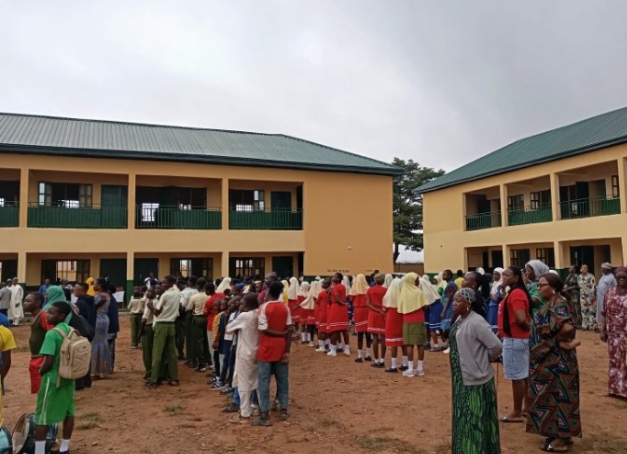
Aisha Garba, executive secretary of UBEC, announced the development on Wednesday during an inspection tour of renovated schools and a digital learning centre at Basic and Secondary School, Nyanya Hausawa, and Model Girls Junior Secondary School, AMAC Estate, Abuja.
Garba said the 1,074 digital learning centres commissioned under the latest intervention had increased the total number established since the beginning of President Bola Tinubu’s administration to more than 2,000.
She said the classroom renovation projects were designed to improve learning conditions and establish minimum standards for basic education infrastructure, while complementing interventions by state governments and the Federal Capital Territory Administration.
According to her, the interventions form part of broader reforms aimed at providing pupils with safe and conducive learning environments and access to modern educational technology.
Garba said UBEC had adopted a whole-school approach to infrastructure development based on newly developed minimum standards, replacing the practice of addressing isolated deficiencies without considering the overall needs of a school.
“We are no longer going to renovate a window or put in one chair and leave other hundreds of students sitting on the floor,” she said.
She said schools selected for intervention would undergo comprehensive assessments covering classrooms, furniture, toilets, water supply, electricity and security.
“Any school that government is going to renovate, whether it’s federal government or state government or local government, they must follow that minimum standard,” Garba said.
The digital learning centres, according to project facilitators, are technology-enabled facilities established to expand access to digital education and improve teaching and learning in basic education schools.
The centres are equipped with information and communication technology devices, digital learning resources, internet connectivity and other supporting infrastructure to enable teachers and pupils to use technology for educational purposes.
Nura Ibrahim, director of physical planning at UBEC, said the commission targeted schools in remote and forested locations that had suffered serious infrastructural deficiencies.
He said condition assessments were conducted before rehabilitation work began to determine the extent of intervention required in each school.
“The first thing we observed was that some of the buildings were completely defective and had lost their structural integrity. Some of the classrooms were unsafe. The beams were cracked and some parts had already fallen apart,” Ibrahim said.
According to the rehabilitation brief, the Nyanya Hausawa project was executed under UBEC’s 2025 direct intervention project and involved the rehabilitation, furnishing and equipping of the LEA Nursery and Primary School and Government Junior Secondary School.
Gideon Isah, principal of the school, described the commissioning of the renovated facilities as a historic occasion, recalling the poor condition of the school before the intervention.
Isah said some pupils had previously been compelled to sit on bare floors because of inadequate furniture, adding that the rehabilitation had significantly improved the learning environment.