‘Strange practice’ — JAMB asks Adeseun Ogundoyin poly to retract advert for daily-part-time programme
The board said it found it imperative to address the concerning trend of a strange admissions-practice labeled as daily- part-time (DPT) by certain polytechnics and top up (TU) by some universities.

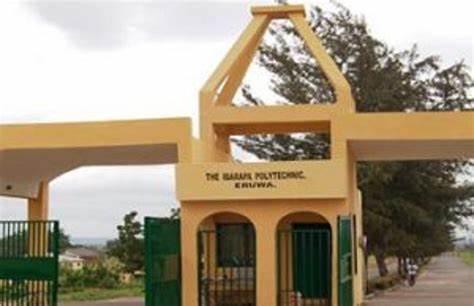
The Joint Admission and Matriculation Board (JAMB) says the management of Adeseun Ogundoyin Polytechnic in Eruwa, Oyo state, to retract an advertisement calling for admission into “daily- part-time” (DPT) programme.
Speaking at a press conference in Abuja on Sunday, Fabian Benjamin, JAMB spokesperson, said the board found it imperative to address the “concerning trend of a strange admissions-practice labeled as daily- part-time (DPT) by certain polytechnics and “top up” (TU) by some universities”.
“A recent and particularly egregious example of this is the advertisement placed by Adeseun Ogundoyin Polytechnic, Eruwa, in Oyo State, published in the Tribune on Wednesday, July 31, 2024, inviting candidates to apply for its two-year Daily Part Time (DPT) programme,” he said.
“It is crucial to clarify that no such programmes are approved by National Board for Technical Education (NBTE) nor by National Universities Commission (NUC). Both are also alien to the education system in Nigeria.
“They are fraudulent devices to side-line quality, approved quota for full time admission, falsify records and consequently, rake illegitimate income and derail the ambition and career of innocent (and some equally crooked) candidates.
“The management of Adeseun Ogundoyin should retract the advert because the NBTE has written to say that the programme is not recognised.
“The candidates with zero or abysmally low UTME score are rationally attracted to such contraption which would lead to nowhere.
“Part-time programmes are strictly regulated, allowing institutions to admit only up to 150% of the approved full-time capacity.
“However, some institutions have been found to admit an excessive number of candidates through this unrecognized DPT programme, merging them with full-time students in classrooms and purporting to graduate them at the same time with full time students.