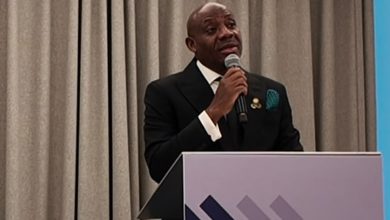
Boxing legend George Foreman dies at 76
The boxing legend died on Friday, at 76, according to his family,

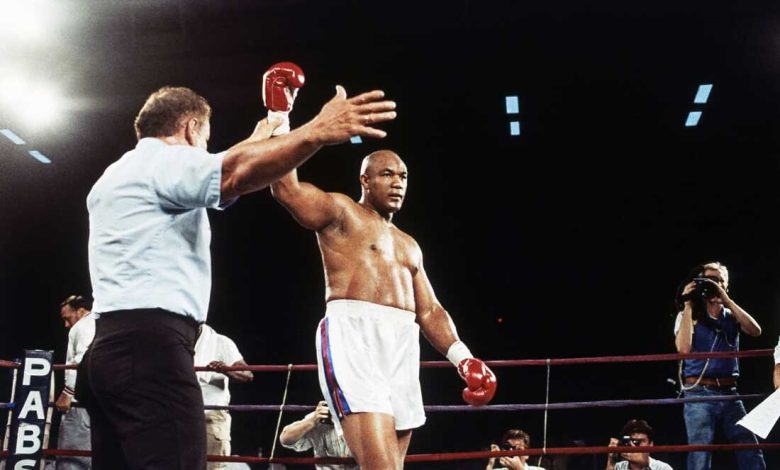
Two-time heavyweight champion and Olympic gold medalist, George Foreman, is dead.
The boxing legend died on Friday, at 76, according to his family,
The impact of Foreman, a trailblazer in boxing and beyond, extends beyond his historic win at the age of 45 in the “Rumble in the Jungle” match against Muhammad Ali.
He was a philanthropist, a devout clergyman, and a staunch defender of his accomplishments, according to his family.
A statement by his family emphasised his lasting impact as a champion of tenacity and integrity, even though the reason of death is yet unknown.
Muhammad Ali defeated him in their well-known Rumble in the Jungle bout in 1974, where he lost his first title.
However, Foreman nearly doubled Ali’s record with an incredible 76 wins, including 68 knockouts, throughout his professional boxing career.
He decided to put his name on a best-selling grill before retiring from boxing in 1997, a move that brought him revenues far greater than his boxing earnings.
In an Instagram post on Friday evening, his family wrote: “Our hearts are broken.”
“A devout preacher, a devoted husband, a loving father, and a proud grand and great grandfather, he lived a life marked by unwavering faith, humility, and purpose.
“A humanitarian, an Olympian, and two-time heavyweight champion of the world, He was deeply respected – a force for good, a man of discipline, conviction, and a protector of his legacy, fighting tirelessly to preserve his good name – for his family,” the statement continued.
Born on January 10, 1949, in Marshall, Texas, Foreman grew up in the segregated American South with six siblings, all of whom were raised by a single mother.
After dropping out of school, he started robbing people on the street before he finally found a place in the ring.
Before going pro and winning 37 straight fights, Foreman won the heavyweight gold medal at the 1968 Mexico City Olympics at the age of 19.
During his career, he only lost five fights.
In 1973, he defeated the then-unbeaten reigning champion Joe Frazier in Kingston, Jamaica, knocking him down six times in the first two rounds.
One of the most well-known boxing contests ever is his 1974 Rumble in the Jungle vs Ali in Kinshasa, Zaire, which is now the Democratic Republic of Congo.
After losing his throne seven years prior to declining to be drafted into the Vietnam War, Ali, the older man, was the underdog.
In an October interview with BBC World Service Newshour, Foreman recounted the historic bout, saying that everyone believed he was going to destroy Ali.
“Oh, he’s not going to last one round,” the boxer said experts were predicting at the time.
Foreman told the BBC he typically would get “real nervous” and have “butterflies” before any boxing match, but that night – it was the “most comfortable” he had felt.
However, the crafty Ali employed a strategy that came to be known as “rope-a-dope,” wearing Foreman down and forcing him to unleash hundreds of blows before Ali pounded him in the eighth round and knocked him out.
Following a second career loss in 1977, Foreman retired and became an ordained preacher at the Church of the Lord Jesus Christ in Texas, which he founded and built.

He told the BBC that losing to Ali was the “best thing that ever happened to me” since it finally inspired him to preach in order to “get my message out.”
He said that his preaching began modestly, with friends and on street corners, before expanding. According to Foreman’s website, “We began meeting informally at various homes in Houston, and before long, the crowds became too large for most houses to accommodate.”
“Eventually, we bought a piece of land and an old, dilapidated building on the north-east side of Houston.” Foreman came out of retirement in 1987 to raise money for a youth centre he founded.
He won 24 matches before losing to Evander Holyfield after 12 rounds in 1991. In 1994, Foreman knocked out unbeaten Michael Moorer to become the oldest-ever heavyweight champion at age 45.
He became an ad pitchman for his George Foreman Grill, which millions have purchased since it hit the market in 1994, thanks in part to his memorable catchphrase, the “Lean Mean Grilling Machine”.
Foreman had five marriages. Among his 12 children are five sons, all of whom go by the name George.
He explained on his website that he named them after himself so they “they would always have something in common”.
“I say to them, ‘If one of us goes up, then we all go up together,” he explained. “And if one goes down, we all go down together!’