‘Third U-turn in one week’ — presidency accuses Atiku of playing politics with petrol subsidy

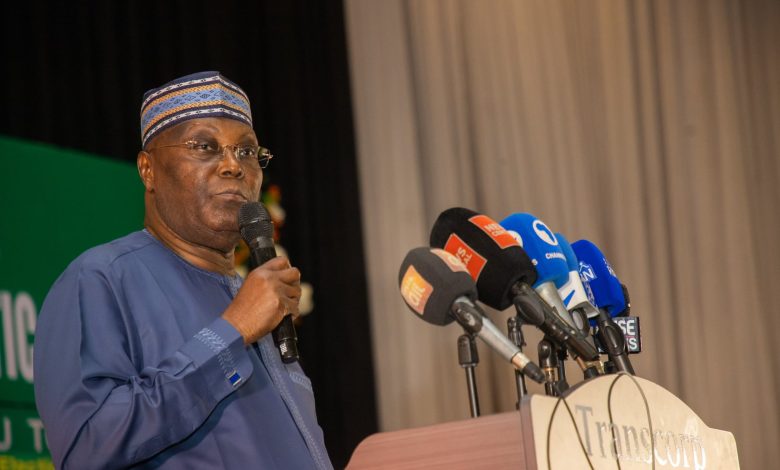
The presidency has accused former Vice-President Atiku Abubakar of playing politics with petrol subsidy.
In a statement issued on Wednesday, Bayo Onanuga, special adviser to President Bola Tinubu on information and strategy, said Atiku’s recent comments on petrol subsidy had created confusion over the former vice-president’s actual policy position ahead of the 2027 presidential election.
Onanuga said Nigerians had heard three different explanations of what an Atiku administration would do about petrol subsidy within one week.
He said Paul Ibe, Atiku’s spokesperson, initially announced that the former vice-president would restore petrol subsidy if elected president and later phase it out.
According to Onanuga, Ibe described the measure as a temporary intervention to give Nigerians and businesses room to recover.
He said Phrank Shaibu, another senior aide to Atiku, later described Ibe’s statement as an “unauthorised and misleading characterisation” of Atiku’s position.
Onanuga said Shaibu explained that Atiku would not set a predetermined date for ending the subsidy, but would retain it until domestic refining expands, supply stabilises, competition deepens and the market can deliver affordable prices without government support.
“Just hours later, Atiku himself intervened and effectively overruled that clarification,” Onanuga said.
“He insisted that his position ‘has not changed’ and that he would restore what he called a ‘targeted subsidy’ if elected president.”
The presidential aide said the conflicting positions amounted to a serious policy contradiction rather than a matter of semantics.
“If Atiku’s position has not changed, why did one of his principal aides say the subsidy would be temporary and phased out? Why did another senior aide have to publicly disown that explanation and introduce a completely different framework based on market conditions? And why did Atiku then step in to reaffirm the original position?” he asked.
Onanuga said Nigerians deserved clarity and not “policy by trial and error”.
He also challenged Atiku’s argument that restoring petrol subsidy would make fuel and other essential goods more affordable, saying several factors determine petrol prices.
According to him, international crude oil prices, exchange rates, refining costs, transportation and distribution expenses, among other factors, influence pump prices.
“Competition can improve efficiency and margins, but it cannot magically insulate Nigeria from global crude oil prices or other input costs,” he said.
Onanuga also rejected what he described as an oversimplification of the relationship between petrol prices and food inflation.
He said while energy and transportation costs affect food prices, petrol prices were not the only drivers of food inflation.
He listed agricultural productivity, insecurity, exchange rates, logistics, storage, flooding, input costs, money supply and supply constraints as other factors affecting food prices.
“A serious economic programme must address these factors, as President Bola Ahmed Tinubu has been doing for the past three years, rather than reduce the entire cost-of-living crisis to petrol prices,” he said.
Onanuga challenged Atiku to explain what he meant by “targeted subsidy”, including its cost, beneficiaries, funding mechanism and the economic conditions that would determine its termination.
“Nigerians cannot afford another opaque and potentially costly subsidy regime dressed up in new language,” he said.
The presidential aide also questioned Atiku’s argument that subsidy would follow the price of crude oil, noting that petrol constitutes only part of the products obtained from a refined barrel of crude.
He said other products include aviation fuel, kerosene, diesel, petrochemical feedstocks, asphalt, hydrocarbon gas liquids, lubricants, waxes, petroleum coke and sulphur.
Onanuga specifically recalled that the Olusegun Obasanjo administration, in which Atiku served as vice-president, deregulated diesel in 2004.
He added that kerosene and jet fuel were deregulated in 2009, while kerosene subsidies were removed in 2016.
He questioned whether an Atiku administration would subsidise other petroleum products if it supplied refineries with discounted crude.
“Will Atiku subsidise all these by-products of the barrel as well, since kerosene is used by the underprivileged to cook, and many homes and factories use diesel to power generators and delivery trucks?” Onanuga asked.
He also questioned whether refineries receiving discounted crude would be allowed to profit from the other products while government focused its subsidy only on petrol.
Onanuga concluded by accusing the former vice-president of lacking a coherent policy position on petrol subsidy.
“The economy is too serious for policy somersaults, incoherence, destructive populism and election gimmicks,” he said.